Córdoba's clusters align their strategies with the UN SDGs
More than 10 cluster managers met to prioritize strategic goals that add value to each cluster's value chain and member institutions. The activity was led by Guillermo Acosta, Minister of Economy and Public Management and president of the Agencia Competitividad Córdoba. The aim…
More than 10 cluster managers met to prioritize strategic goals that add value to each cluster's value chain and to its member institutions.
The activity was led by Guillermo Acosta, Minister of Economy and Public Management and president of the Agencia Competitividad Córdoba.
The aim is to win international markets by providing the goods and services the world needs, while keeping the 2030 Agenda in view.
What do chickpeas have in common with aerospace, the auto industry with pig farming, or cardboard recycling with the cultural industries?
At first glance, the answer is "nothing." But "nothing" becomes "a lot" when such different industries come together at a Programa Córdoba Cluster meeting, and "everything" when the purpose of that meeting is to find ways to align Córdoba's clusters with the 2030 Sustainable Development Goals (SDGs) adopted by the United Nations General Assembly.
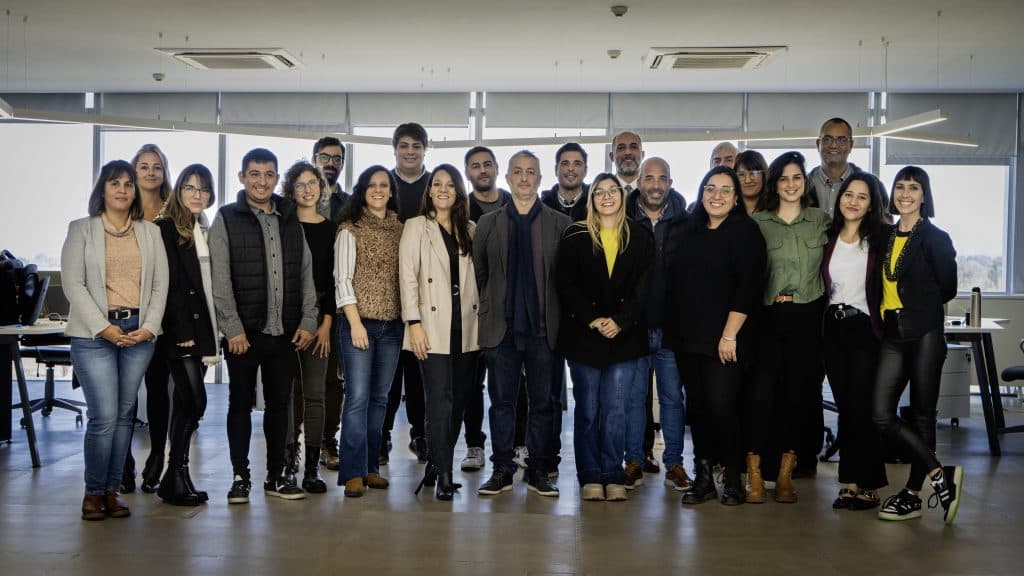
That was precisely the goal of the meeting held by the province's cluster managers (coordinators), attended by Guillermo Acosta, Minister of Economy and Public Management and president of the Agencia Competitividad Córdoba; Executive Director Natalia Seiler; and the Agency team.
It was a workshop on adopting the Sustainable Development Goals as a cluster planning tool. The purpose of the meeting was to prioritize the strategic goals of the province's clusters, setting short- and medium-term targets and actions to add value to each cluster's value chain and to its member companies and institutions.

"It is key to think about the cluster and its strategy: why we built it. Go for quick wins and keep a clear view of the goals ahead. The business sector wants concrete results, so it is important to maintain a competitive value proposition that is sustainable over time, and at the Agencia Competitividad we can help you think through what the public sector, the private sector and academia expect," Acosta said during the meeting.
It was the first planning workshop held by the cluster managers, and it served to share where each cluster stands, review its goals and targets, and identify opportunities for improvement. Participants highlighted the value of exchange among clusters to boost business competitiveness and strengthen the impact of productive development initiatives.
The SDGs are 17 goals, broken down into 169 targets, that form a global call to action to end poverty, protect the planet and improve the lives and prospects of everyone by 2030. Adopting them and integrating them into the province's productive processes and goals shows that Córdoba understands and speaks the same language as the world's leading economies as it seeks a bigger role in international trade.
"We shared best practices and success stories, and we left with the challenge of thinking about how each cluster can integrate the SDGs for 2030. It was a learning and collaboration opportunity for the development of the Programa Córdoba Cluster," summed up Lorena Llanes, Operations Manager of Córdoba Cluster.

María José Salguero, cluster manager of Servicios Empresariales, said the workshop was a tool to "connect the different clusters working in Córdoba, which creates agreements and working spaces that benefit us all. It brought our goals down to earth so we could see which SDG we can contribute to most from where we stand."
Martín Ozuna, Aerospace cluster manager, summed up the workshop's importance: "It is key to set goals and policies that align our strategies with what the world currently demands under the 2030 Agenda, and so achieve our internationalization and competitiveness goals."
Also taking part were Silvia Aisa, R&D&I Coordinator at the UNC's Office of Innovation and Technology Transfer, along with cluster coordinators and members: Pablo Azulay of the Cluster de Biotecnología; Violeta Parodi of the Cluster Reciclador y Cartonero; Franco Varela and Edoardo Francanzani of the Cluster del Maní; Carlos Bertone and Lucas Vanoli of the Cluster Automotriz; Daniela Medrano of the Cluster de Industrias Culturales y Creativas; Gabriel Butto of the Cluster de Garbanzo; María José Salguero and Anabella Ortega of the Cluster de Servicios Empresariales; Daiana Villareal of the Cluster de la Cadena Porcina de Oncativo; Sabina Trossero and Soledad Bordi of the Cluster de Petróleo, Gas y Minería; Martín Ozuna of the Cluster Aeroespacial; and Lucas Marinsalda of the Cluster Proteínas Vegetales.